




For agency account managers and in-house marketing directors overseeing franchise brands, the “Meta Paradox” is a daily reality. On one hand, Meta (Facebook and Instagram) remains the undisputed heavyweight of local discovery. On the other, managing Meta ads for 50, 500, or 5,000 locations often feels like trying to paint a moving train with a toothbrush.
The data is clear: local relevance isn’t just a “nice-to-have” anymore. According to the 2026 HubSpot State of Marketing Report, 73% of global internet users use social media specifically to research brands and products. Furthermore, localized social media advertising is more critical than ever; data from Social Pulse Stats indicates that dynamic ad personalization can increase click-through rates (CTR) by as much as 34%.
But here is the catch. As you scale, the operational “tax” of being local starts to bankrupt your team’s productivity. How do you maintain brand standards, update seasonal offers across a thousand different ad sets, and ensure every home service lead is going to the right franchisee without burning out your staff?
The answer lies in the intersection of localized creative strategy and an ad management strategy supported by a ppc management tool.
The Shift: From Manual Control to Machine Learning
For over a decade, the hallmark of a skilled Meta advertiser was the ability to “hack” the system through granular audience targeting—layering interests, behaviors, and complex lookalike models to find a niche. However, Meta has fundamentally shifted its architecture away from this manual control. With the global rollout of the Andromeda ad delivery engine and the Lattice predictive model, the platform now actively discourages—and in some cases, has deprecated—the deep interest-targeting levers of the past.
Instead of the advertiser telling Meta who the customer is, Meta’s AI now tells the advertiser. By moving toward Advantage+ and “Broad” targeting, Meta’s algorithm uses the ad’s own content—the visuals, the captions, and the “hook”—as the primary targeting signal.
Why Creative is the New Targeting
As a result of this loss of manual control, the burden of performance has shifted entirely from the technical setup to creative quality. In 2026, the algorithm “reads” your creative to determine who should see it.
- The “Creative-as-Targeting” Model: A video featuring a “Founder’s Story” will naturally be served to users who value brand authenticity, while a “Problem/Solution” graphic will find users actively searching for a fix.
- The Inversion of Effort: Advertisers are no longer rewarded for spending hours in Ads Manager; they are rewarded for spending hours in the “edit suite.”
- Algorithmic Preference: Meta’s systems now prioritize “differentiated assets”—ads that are distinct in message and format—to help its AI find new pockets of buyers that static interest groups would have missed.
The strategic shift is clear: if your creative is your targeting, then your creative must be impeccable. But for multi-location brands, this creates a massive friction point. The “Creative-as-Targeting” model works beautifully for a single national e-commerce brand, but it begins to fracture when applied to a franchise network with diverse local needs.
Why “National-to-Local” is Failing Home Service Brands
In the home services sector—think plumbing, HVAC, or landscaping—proximity is the primary purchase driver. A homeowner in Phoenix with a broken AC doesn’t care about a national brand’s “Summer Comfort” campaign; they care if a technician can be at their door in North Scottsdale by 4:00 PM.
Despite this, many agencies default to “National-to-Local” structures (one big campaign with a thousand tiny radiuses) because the alternative—creating unique, localized ads for every branch—is a huge lift for many agencies and in-house marketing teams.
Recent benchmarks from TheeDigital show that home service providers are seeing average CPLs (Cost Per Lead) climb toward $34 in 2026. This rising cost means that generic creative is no longer affordable. If your creative is stale, your efficiency disappears.
The Creative Bottleneck
Meta’s 2026 algorithm has shifted the game. Manual targeting is less important than it used to be; creative is now the primary driver of targeting. According to Verde Media, your creative acts as the targeting mechanism—attracting the right people and repelling the wrong ones. If your ad features a generic stock photo of a wrench instead of a branded truck in a recognizable local neighborhood, the algorithm receives “weak signals,” and your costs skyrocket.
Solving the Scale Problem with Adplorer’s Bulk Editing Tool
This is where most multi-location advertising programs hit a wall. To stay optimized, you need to constantly refresh creative, test new hooks, and update location-specific offers (e.g., “$50 off water heater repair in Des Moines” vs. “Free inspection in Cedar Rapids”).
Doing this in Meta Ads Manager for 200 locations involves thousands of clicks. It is prone to human error and, frankly, it’s a waste of high-level talent.
Enter Adplorer Bulk Editing
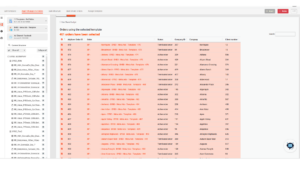
Adplorer was built specifically to solve this “operational tax.” Our Bulk Editing Tool allows agencies and franchise marketers to:
- Deploy Global Changes Rapidly: Need to swap out a holiday-themed video for a “Spring Cleaning” Reel across 500 accounts? You can initiate this change in Adplorer in minutes, not days.
- Dynamic Localization: Automatically insert the local city name, phone number, or specific franchisee name into ad copy across the entire network.
- Creative Refresh at Scale: Because creative fatigue happens faster in small geographic radiuses, you need to rotate assets frequently. Adplorer allows you to push new batches of creative to specific “groups” of locations (e.g., all “Coastal” or “Midwest” branches) with one action.
Efficiency is the New Competitive Advantage
The “old way” of managing multi-location Meta ads—logging into individual accounts or using clunky spreadsheets—is a recipe for stagnation. It prevents agencies from being strategic because they are too busy being “button pushers.”
By combining the power of localized, high-volume creative with Adplorer’s automation and bulk editing suite, you move from surviving the complexity to mastering it. You get to provide your franchisees with the “Big Brand” polish they expect, paired with the “Local Shop” relevance their customers demand.


